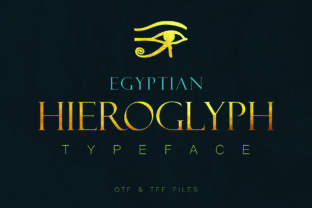
Egyptian Hieroglyph: A Creative Font for Modern Branding
I was staring at a blank brand board for a local artisan tea shop, trying to capture a sense of ancient craft and modern elegance. I’d cycled through a few serif and sans-serif options, but nothing felt distinct enough. Then, I opened my font library and dropped “Egyptian Hieroglyph” into the logo concept. Suddenly, the mood shifted entirely. This unique hieroglyph typeface, based on the Egyptian alphabets, isn't just a novelty dingbat; it's a fully functional font that can inject a powerful narrative into your visual identity.
Egyptian Hieroglyph for Logo Design and Distinctive Brand Marks
When you first use Egyptian Hieroglyph in a logo draft, its impact is immediate. Each character is a beautifully crafted symbol, carrying a weight of history and artistry. For the tea shop, using a single, carefully chosen hieroglyph as the central mark created a logo that felt both timeless and bespoke. It wasn’t just text; it was an emblem. As a font within the dingbats category, its strength lies in creating singular, memorable brand marks rather than spelling out full names. I tested it on a business card mockup, and even at a small scale, the glyph retained its clarity and intrigue, making the brand feel established and purposeful.
Using Egyptian Hieroglyph in Packaging and Product Label Design
Moving to packaging mockups revealed another layer of its utility. On a minimalist tea tin label, a primary hieroglyph acted as a stunning focal point above a clean, modern sans-serif for the product name and details. The font’s inherent decorative quality elevates packaging without needing additional illustrated graphics. It brings a handmade, archaeological sensibility to skincare brands, bakery boxes, or craft spirit bottles. However, it’s crucial to remember Egyptian Hieroglyph is a display font. It’s not designed for body text or lengthy descriptions on labels. Its power is in accent and artistry, used sparingly to anchor the design’s visual hierarchy.
Integrating Egyptian Hieroglyph into Digital Brand Assets
The transition to digital spaces is a real test for any decorative font. I applied Egyptian Hieroglyph to a website header and key social media layout graphics. In the hero section of a site, a large glyph commands attention and sets a unique tone immediately. For Instagram posts or Pinterest graphics, it creates cohesive branding across platforms when used as a consistent decorative element. As a font file, it integrates seamlessly into design software for these assets. Yet, readability is the key consideration. It performs best as a visual anchor alongside highly legible fonts for menus, body copy, and calls-to-action. This pairing ensures your brand is striking without sacrificing user experience.
Font Pairing and Typography System Advice for Egyptian Hieroglyph
A successful brand system hinges on thoughtful font pairing. Egyptian Hieroglyph, being a potent display font, needs a stable, neutral partner. For the tea shop project, I paired it with a classic serif font for supporting text, which created a dialogue between ancient symbolism and traditional print elegance. For a more contemporary creative studio identity, a sleek, geometric sans-serif can ground the hieroglyph’s ornate character. Avoid pairing it with other overly decorative or script fonts, as that can lead to visual competition and clutter. Its role is to be the distinctive accent within a balanced typography system.
Practical Considerations Before Using Egyptian Hieroglyph in Client Work
Before committing Egyptian Hieroglyph to a final client project, a few practical tests are essential. First, check its performance at various sizes—especially very small, like on a tag or footer. Second, review the font files provided. Does it include the glyphs or alternates you need? Since it’s based on the Egyptian alphabets, understand its symbolic range to choose characters that resonate with your brand story. Crucially, always verify the commercial font licensing. Can you use it in client brand identity, packaging, merchandise, and web fonts? Confirming this protects your work and your client’s investment. This diligence ensures this unique hieroglyph typeface becomes a reliable, not just a whimsical, part of your design toolkit.
Ultimately, Egyptian Hieroglyph isn’t for every project. Corporate reports, lengthy body text, or ultra-minimalist tech brands would likely find it dissonant. But for brands built on story, craft, history, or unique artistry—a boutique, a café, a handmade shop, a cultural product—it offers a direct path to a distinctive visual voice. It moves beyond mere decoration to become a carrier of brand meaning, making it a genuinely valuable font for designers looking to create identity with depth.